Where to Invest in French Real Estate in 2026: Trends, Regions & Opportunities
2026 emerges as a pivotal year for French real estate. Price stabilization, shifting interest rates, mandatory energy upgrades for older properties, and new regional dynamics reshape the investment landscape. Discover which regions and neighborhoods offer genuine opportunities, which investor profiles succeed, and how a real estate hunter can guide you toward France's best property deals in 2026.
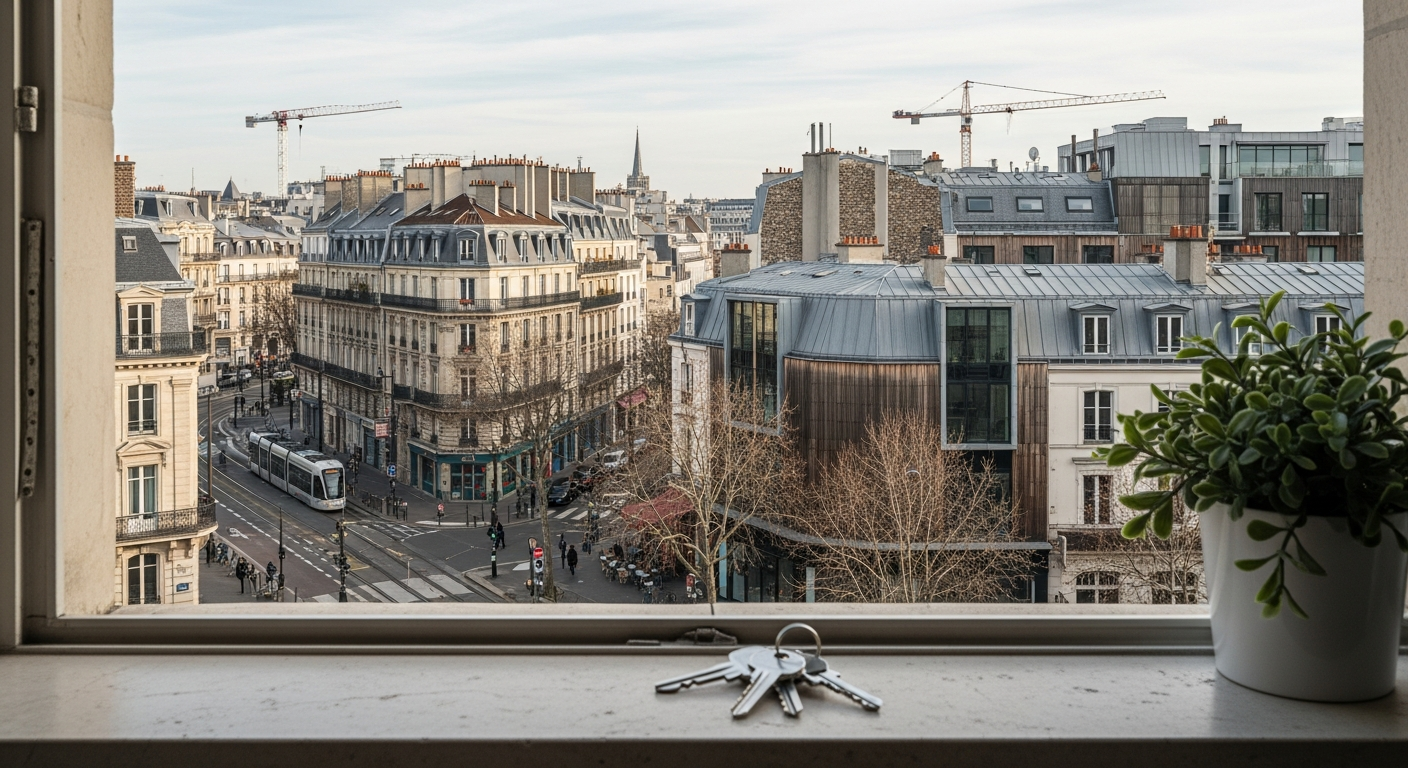
2026 emerges as a pivotal year for French real estate. Price stabilization, shifting interest rates, mandatory energy upgrades for older properties, and new regional dynamics reshape the investment landscape. Discover which regions and neighborhoods offer genuine opportunities, which investor profiles succeed, and how a real estate hunter can guide you toward France's best property deals in 2026.
Table of Contents
- French Real Estate Context 2026: Stabilization & Market Shift
- The Winning Regions: Where Prices Are Rising
- Investment Returns by Region: Comparative Analysis
- Five Key Trends Reshaping French Property Investment
- Investor Profiles That Succeed in 2026
- Secondary Cities: The Next Frontier for Value Investors
- Case Study: Smart Investor in Bordeaux
- Energy Efficiency Requirements & Investment Impact
French Real Estate Context 2026: Stabilization & Market Shift
After the severe interest rate crisis of 2023-2024 that devastated transaction volumes—down nearly 30% year-over-year—French real estate is entering a phase of stabilization and intelligent repositioning. The market is no longer driven by panic-buying or desperate sellers, but by strategic players who understand emerging regional dynamics.
The European Central Bank's tentative rate cuts, combined with stabilizing inflation, create an environment where informed investors can operate with confidence. However, this isn't a return to 2021-era optimism. Instead, 2026 rewards investors who understand where genuine wealth is being created—and it's not in Paris.
Why 2026 Differs from Previous Years
The French property market has undergone structural changes. Parisian and major metropolitan areas no longer dominate investment flows. Remote work, quality-of-life preferences, and mandatory energy efficiency upgrades have created new investment geography. Regions that seemed peripheral five years ago now attract serious capital and demographic growth.
Additionally, the French government's energy transition requirements (DPE—Diagnostic de Performance Énergétique) are accelerating property revaluations. Properties rated F or G (poorest energy efficiency) face rising costs and reduced marketability, while well-renovated properties command premium pricing.
Smart investors in 2026 focus on: secondary cities with strong demographic growth, properties with modern energy efficiency, emerging neighborhoods with genuine infrastructure investment, and regions where residential investment generates 4-6% annual returns through rental income.
The Winning Regions: Where Prices Are Rising
Southwest Corridor: Toulouse, Bordeaux, Bayonne
The southwestern corridor represents 2026's strongest investment opportunity. Toulouse and Bordeaux combined are attracting 50,000+ net new residents annually, driven by tech sector growth (aerospace in Toulouse, digital in Bordeaux) and genuine quality-of-life appeal. Prices have stabilized after modest corrections, positioning them for 3-4% annual appreciation alongside healthy rental yields (4.2-5.1%).
Property costs remain 40-50% below Paris while maintaining modern amenities and employment opportunities. A €300,000 investment in central Bordeaux or Toulouse generates €12,600-€15,300 annual rental income with realistic appreciation prospects.
Atlantic Coast: Nantes, La Rochelle, Saint-Nazaire
The Atlantic coast benefits from similar demographic tailwinds. Nantes in particular—France's most dynamic mid-size city—is experiencing genuine transformation. University expansion, corporate relocations, and infrastructure investment (TGV improvements, urban regeneration) drive both residential and commercial property values.
Property prices (€3,800-€4,500/m²) offer value relative to potential. Rental yields average 4.8-5.4%, and multi-year appreciation trends show 3.5-4.5% annual growth. Foreign and domestic investors recognize Nantes's potential, creating healthy market depth.
Provence & Southeast: Lyon, Aix-en-Provence, Avignon
While prices in Provence have risen significantly, Lyon and the broader southeast corridor remain compelling for investors seeking lifestyle alongside returns. Lyon offers the stability of France's second-largest city with technology sectors, banking, and education. Aix-en-Provence attracts international residents seeking Provençal lifestyle combined with genuine employment opportunities.
Prices run €4,200-€5,600/m² in city centers but deliver 4.1-4.9% rental yields. The region's international appeal creates strong tenant demand and appreciation potential (3-4% annually).
Rising Stars: Strasbourg, Rennes, Grenoble
University cities with strong employment growth offer exceptional value in 2026. Strasbourg (EU hub benefits), Rennes (tech sector growth), and Grenoble (research/tech cluster) all feature:
Lower entry prices (€3,000-€4,200/m²), strong young demographic profiles, healthy rental demand from students and professionals, appreciation potential of 3.5-4.2% annually, and rental yields of 4.6-5.3%.
These cities remain overlooked by major international investors, creating opportunity for early movers. They're genuinely improving, with measurable employment growth and infrastructure investment.
Investment Returns by Region: Comparative Analysis
| Region/City | € per m² | Annual Rent Yield | Price Appreciation (2026-2030) | Population Growth | Investment Suitability |
|---|---|---|---|---|---|
| Toulouse | €3,800-€4,400 | 4.2-5.1% | 3.5-4.2% | +1.8% annually | Excellent |
| Bordeaux | €3,900-€4,600 | 4.0-4.9% | 3.2-4.0% | +1.2% annually | Very Good |
| Nantes | €3,800-€4,500 | 4.8-5.4% | 3.8-4.5% | +2.1% annually | Excellent |
| Lyon | €4,200-€5,100 | 4.1-4.8% | 3.0-3.8% | +1.4% annually | Very Good |
| Strasbourg | €3,200-€4,100 | 4.6-5.3% | 3.5-4.2% | +1.6% annually | Excellent |
| Rennes | €3,100-€4,000 | 4.7-5.2% | 3.6-4.3% | +1.9% annually | Excellent |
| Aix-en-Provence | €4,300-€5,400 | 4.0-4.7% | 3.0-3.9% | +1.3% annually | Very Good |
| Grenoble | €3,000-€3,900 | 4.8-5.4% | 3.7-4.4% | +1.7% annually | Excellent |
| Paris (Central) | €8,500-€12,000 | 2.8-3.5% | 2.0-3.0% | +0.4% annually | Limited Returns |
Key Insight: Secondary cities deliver 40-60% higher rental yields while offering comparable or superior price appreciation compared to Paris. A €400,000 investment in Toulouse generates €16,800-€20,400 annually in rent, while the same investment in central Paris yields only €11,200-€14,000. Over ten years, regional appreciation combined with rental income vastly outperforms Parisian real estate.
Five Key Trends Reshaping French Property Investment in 2026
Trend #1: The Energy Efficiency Revolution
France's mandatory DPE ratings (Energy Performance Certificates) are fundamentally altering property values. Properties rated F or G (built pre-1974, poorly insulated) face declining demand and rising carrying costs. Owners of these properties increasingly face two choices: substantial renovation (€50,000-€150,000) or accept reduced marketability and appreciation potential.
Investors recognizing this trend are purchasing well-renovated properties rated B or C at modest premiums—knowing these assets will retain value and command rental premiums. Modern heating systems, insulation upgrades, and renewable energy installations aren't luxuries in 2026; they're investment insurance.
Trend #2: Remote Work Redefines Geographic Value
Permanent remote work arrangements mean geographic proximity to major employment centers no longer determines housing value. Mid-size cities with cultural amenities, education, and healthcare now compete with major metros on lifestyle grounds while offering 50% lower property costs.
Investors are capitalizing on this by purchasing quality properties in smaller cities, renting to remote workers at premium rates, and realizing superior returns. A €250,000 apartment in central Rennes attracts high-earning remote workers willing to pay €1,200-€1,500/month for superior lifestyle versus cramped Parisian accommodations at similar pricing.
Trend #3: Shared Ownership & Co-Investment Platforms
Fractional property ownership platforms are allowing investors to diversify across multiple properties and regions with smaller capital commitments. While not appropriate for all investors, these platforms enable exposure to premium properties and geographic diversification previously requiring substantial capital.
Trend #4: Demographic Migration Accelerates Regional Winners
Measurable demographic shifts favor southwestern and Atlantic coast regions. Migration from Paris to secondary cities continues accelerating, with young professionals seeking better lifestyle-to-cost ratios. This demographic trend translates directly into property appreciation and sustained rental demand.
Trend #5: Corporate Relocations Create New Clusters
Major corporations relocating facilities from Paris and Brussels (or expanding operations) create new employment magnets. Tech companies in Toulouse, financial services in Lyon, renewable energy manufacturing in western France—these corporate decisions precede housing demand spikes. Investors who recognize these early create significant value.
Investor Profiles That Succeed in 2026
Profile #1: The Yield Seeker (Target: 5%+ Annual Returns)
These investors prioritize current income over appreciation. They purchase multi-unit properties in university cities (Strasbourg, Rennes, Grenoble) where student and young professional tenant demand ensures consistent 4.8-5.4% yields. They're comfortable with moderate appreciation (3-4% annually) in exchange for strong cash flow.
Best Strategy: Diversify across 3-4 properties in different university cities, creating geographic tenant demand diversification. Student-focused housing guarantees 95%+ occupancy and modest rent growth.
Profile #2: The Appreciation Play (Target: 4%+ Annual Appreciation)
These investors recognize emerging regions before widespread discovery. They purchase quality properties in Nantes, Bordeaux, or Toulouse—cities attracting genuine economic growth and demographic migration. They're willing to accept 3.5-4.5% current yields in exchange for 4-5% annual appreciation, creating compound wealth growth.
Best Strategy: Focus on primary residences and renovation projects. Purchase undervalued properties with genuine renovation potential, upgrade them, and benefit from both appreciation and rental premium positioning.
Profile #3: The ESG Investor (Sustainability-Focused)
These investors explicitly prioritize energy-efficient properties, sustainable neighborhoods, and environmental alignment. They purchase modern or recently renovated properties rated A/B for energy efficiency, benefiting from lower operating costs, higher tenant appeal, and regulatory tailwinds (energy requirements only tighten).
Best Strategy: Target recently renovated properties with modern systems, heat pumps, solar installations. These command rental premiums and attract quality tenants, offsetting higher acquisition costs.
Profile #4: The Value Hunter (Distressed Properties)
These investors identify undervalued properties requiring renovation, execute strategic upgrades, and benefit from both appreciation and modernization uplift. They operate with contractor relationships, renovation expertise, and capital availability to execute quick turnarounds.
Best Strategy: Partner with a real estate hunter who identifies below-market properties, understands renovation requirements realistically, and negotiates aggressively. Executed properly, €50,000 in renovations creates €80,000-€120,000 in value appreciation.
Profile #5: The Diversified Portfolio Builder
These investors maintain geographic and property-type diversification: primary residences for lifestyle, rental properties for yield, and appreciation-focused acquisitions for growth. They're comfortable with multi-year holding periods and patient capital deployment.
Best Strategy: Work with a real estate hunter to systematically identify opportunities across multiple regions matching your investment criteria. Build a portfolio over 2-3 years rather than rushing major decisions.
Secondary Cities: The Next Frontier for Value Investors
Angers: The Quiet Winner
With 155,000 residents, Angers punches above its weight. Home to major pharmaceutical and automotive headquarters, the city attracts young professionals and offers genuine employment diversity. Property prices (€3,200-€4,100/m²) remain accessible, while rental yields exceed 4.8%. Population growth averages 1.4% annually—modest but consistent.
Investor Appeal: Stable employment, reasonable prices, emerging cultural scene. A €280,000 investment generates €13,400+ annual rent with realistic 3.5-4% appreciation.
Montpellier: The Mediterranean Boom
Montpellier (285,000 residents) is experiencing profound transformation. University expansion, tech sector growth, and Mediterranean lifestyle appeal create strong demographic tailwinds. Property prices (€4,100-€5,000/m²) have risen but offer value relative to nice climate and employment opportunities. Rental yields: 4.1-4.8%.
Investor Appeal: Fastest-growing major city, strong tenant demand, improving infrastructure. Watch for continued appreciation as Paris exodus accelerates.
Dijon: The Burgundy Sleeper
Dijon offers cultural richness, wine region prestige, and emerging tech employment. Property prices (€2,900-€3,800/m²) remain remarkably accessible for a regional capital. Rental yields: 4.7-5.2%. The city attracts remote workers seeking quality-of-life improvements with reasonable property costs.
Investor Appeal: Exceptional entry prices, lifestyle appeal, emerging economic diversification. Early-mover advantage remains available.
Nice: The Riviera Stabilization
While property prices in Nice have corrected modestly (€5,200-€7,500/m²), the city's resilience is undeniable. Mediterranean coastline, year-round climate, and cultural dynamism support sustained demand. Rental yields average 3.8-4.5%, lower than inland alternatives but supported by steady international and domestic tourism.
Investor Appeal: Lifestyle premium, international appeal, tourism-supported rental demand. Better as long-term wealth preservation than appreciation play.
Case Study: Smart Investor in Bordeaux
The Investor Profile
Michel Dupont, a 48-year-old corporate executive, had built wealth through salary and inheritance. However, his €800,000 portfolio faced challenges: stock market volatility, low savings rates in bank deposits, and urgency to build wealth for eventual retirement. He sought real assets delivering steady returns.
The Opportunity Identified
In 2023, Michel engaged a real estate hunter specializing in Bordeaux investment properties. The hunter identified a critical market dynamic: Bordeaux was attracting corporate relocations and young professional migration, but property prices had corrected 8-12% during the 2023 rate crisis, creating temporary opportunity.
Most investors panicked and withdrew. Michel saw clarity: a €400,000 investment in a well-located, modernized apartment offered 4.5% immediate rental yield (€18,000 annually) alongside realistic 3-4% annual appreciation as the market normalized and migration continued.
The Execution
Michel deployed capital across two properties:
Property 1: €350,000 apartment in Chartrons neighborhood (emerging area), rated energy B, with professional tenant earning €1,750/month. Financing: €210,000 mortgage (30-year, 3.8%). Monthly mortgage payment: €996. Net rental income after taxes and maintenance: €680/month or €8,160/year.
Property 2: €250,000 apartment in Cours de l'Intendance (established neighborhood), requiring modest modernization (€25,000 renovation). After upgrades: rental yield of 4.6% = €11,500 annually. Financing: €150,000 (30-year, 3.8%). Monthly mortgage payment: €713. Net rental income: €665/month or €7,980/year.
The Results (18 Months Later)
Income Generated: €16,140 in first-year net rental income (after mortgage interest, taxes, maintenance). Year 2 income: €19,500 (post-full-year appreciation).
Appreciation Realized: Both properties appreciated 3.2% during market recovery phase. Combined appreciation value: +€19,600.
Equity Growth: Mortgage principal paydown (first year): €8,200 combined. Total wealth growth year 1: €23,800 (through rental income + appreciation + mortgage paydown).
Projected 10-Year Wealth: €600,000 initial investment generating €190,000+ in rental income, €120,000+ in appreciation, and €95,000+ in mortgage paydown (total wealth increase: €405,000). His €800,000 grows to €1.2M+, driven by leveraged real estate.
"The hunter's guidance was invaluable. They identified the exact moment when fear had created opportunity. They found properties with genuine rental appeal, assessed renovation needs realistically, and negotiated effectively. My real estate portfolio now generates more wealth than my salary." — Michel Dupont
Energy Efficiency Requirements & Investment Impact
Understanding DPE Ratings
French Energy Performance Certificates (DPE) rate properties A (most efficient) through G (least efficient). The rating determines:
Heating/cooling costs, resale difficulty and price, tenant willingness-to-pay premiums, and future regulatory restrictions (properties rated F/G face potential renting prohibitions).
Investment Implications
| Rating | Property Age / Condition | Typical Price Premium/Discount | Annual Energy Cost | Rental Demand | Investment Score |
|---|---|---|---|---|---|
| A/B | Recent / Excellent | +8-15% | €400-€600 | Very High | ★★★★★ |
| C | Good condition | +0-5% | €800-€1,200 | High | ★★★★☆ |
| D | Average | -0-3% | €1,400-€1,800 | Medium | ★★★☆☆ |
| E | Below average | -5-8% | €2,000-€2,600 | Lower | ★★☆☆☆ |
| F/G | Poor / Very poor | -12-20% | €2,800-€4,500+ | Very Low | ★☆☆☆☆ |
Investment Strategy: Target properties rated B-C that are already modernized, or identify F/G properties where renovation costs are justified by the price discount. A property discounted 15% (€340,000 vs €400,000) where €40,000 in upgrades achieves C rating creates significant value. However, avoid properties rated F/G without clear renovation plans—they face declining marketability.
How a Real Estate Hunter Maximizes Your 2026 Investment
Market Analysis & Region Selection
A qualified real estate hunter provides objective analysis of regional opportunities, demographic trends, employment growth, and price dynamics. Rather than relying on gut feeling, you benefit from data-driven market assessment identifying highest-probability opportunities.
Property Identification & Negotiation
The best properties often never appear on major portals. A hunter with local relationships accesses exclusive off-market listings, renovation opportunities, and motivated sellers. They negotiate aggressively based on comparable property analysis and market knowledge, typically saving 5-10% versus DIY buyers.
Due Diligence & Risk Assessment
A hunter coordinates thorough inspections, assesses renovation requirements realistically, verifies rental demand for property type/location, and identifies hidden risks. They prevent costly mistakes like purchasing properties with structural issues, poor rental prospects, or energy efficiency nightmares.
Rental Yield Optimization
Through market knowledge, a hunter identifies properties positioned for premium rental rates. Understanding tenant preferences, neighborhood amenities, and competitive positioning, they help you maximize income potential while maintaining property quality and tenant satisfaction.
Long-Term Portfolio Strategy
Rather than single-transaction focus, a real estate hunter helps you build systematic portfolio strategy. Should you diversify across regions? Focus on yield or appreciation? Time major purchases strategically? A hunter provides ongoing guidance optimizing cumulative returns.
Actionable Investment Checklist for 2026
Before You Invest
Define your investment profile clearly: yield-focused? appreciation-focused? diversified? Determine your capital availability and financing capacity. Assess your risk tolerance and holding period. Identify geographic preference (which regions appeal to you?). Evaluate tax situation with a French tax advisor (non-resident tax treatment differs significantly).
Property Evaluation
Always verify DPE rating and energy efficiency. Assess neighborhood demographics and employment trends. Compare rental yields against regional benchmarks. Understand renovation costs realistically (get 2-3 contractor estimates). Verify tenant demand through comparable rent analysis. Project 10-year appreciation based on regional trends, not optimistic assumptions.
Financial Structuring
Secure mortgage pre-approval at favorable rates (compare lenders—banks vary significantly). Calculate all costs: purchase price, transfer taxes (7-8%), notary fees (1-2%), inspection/appraisal (€400-€800), insurance, and potential renovations. Project cash flow including mortgage payments, property taxes, maintenance reserve (10% of rent), insurance, and potential vacancy (assume 5-8% vacancy).
Execution
Engage a qualified real estate hunter specializing in your target region and investment type. View multiple properties; don't rush into first interesting option. Negotiate firmly—every percentage point on price improvement impacts long-term returns. Document everything and maintain detailed records for tax reporting.
The Bottom Line: Why 2026 Favors Strategic Investors
2026 represents a distinct inflection point for French real estate investment. After years of disruption from interest rate volatility, the market is stabilizing while regional dynamics fundamentally shift. Secondary cities, not Paris, drive wealth creation. Energy-efficient properties command premiums. Remote work reshapes geographic value. Investors who understand these trends—and act strategically—position themselves for outsized returns.
Whether you're yield-seeking, appreciation-focused, or building diversified portfolio wealth, 2026 offers genuine opportunities. However, success requires clarity on investment objectives, disciplined property evaluation, and strategic negotiation. This is where a real estate hunter becomes invaluable—transforming market knowledge into tangible wealth creation.
The question isn't whether to invest in French real estate in 2026. The question is: where, and with what strategy. Answer those correctly, and you'll build substantial wealth over the coming decade.

Votre chasseur travaille uniquement pour vous : il cherche, visite et négocie à votre place.
- Des biens hors annonces
- Une négociation argumentée
- Un seul interlocuteur jusqu'à l'acte

Find your ideal property in under 2 months
Over 10,000 buyers supported since 2012, making us true experts in property search.